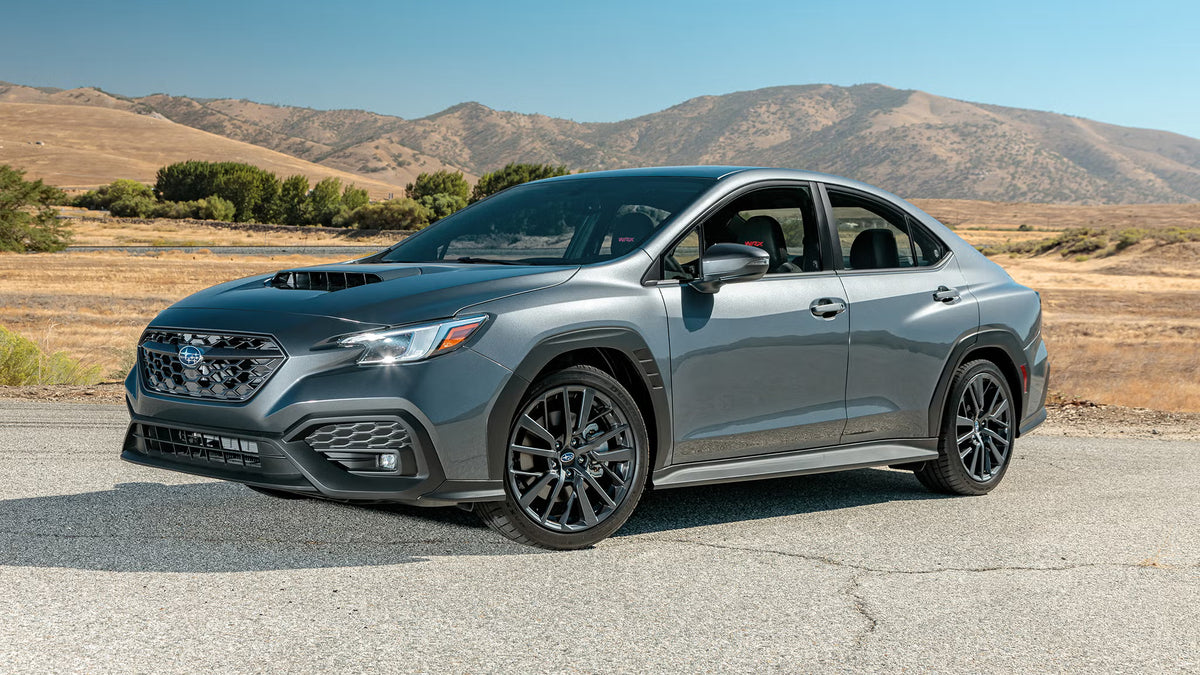
2022+ Subaru WRX – Atlas Open Source Staged Tunes
2022+ Subaru WRX – Atlas Open Source Staged Tunes
Couldn't load pickup availability
Unlock the potential of your 2022+ Subaru WRX with an LRW staged calibration utilizing Atlas open-source ECU tuning software. Designed specifically for the FA24DIT platform, each calibration is tailored to your vehicle's modifications and fuel type, optimizing fueling, ignition timing, boost control, AVCS operation, and overall engine performance.
Whether you're improving your stock WRX, adding full bolt-ons, or upgrading to a larger turbocharger, our calibrations focus on responsive power delivery, consistent drivability, and reliable performance.
With Atlas, LRW can also offer advanced ECU functionality, including CAN-based flex fuel, launch control, and additional supported custom features, without requiring a COBB Accessport.
Two tuning revisions are included with each stage.
Stage 1 – Stock Turbo / Stock Hardware
Mod Requirements:
- Factory FA24DIT 2.4L turbocharged engine.
- Factory turbocharger.
- Factory intake and fuel system.
- Factory boost control configuration.
- Cat-back exhaust is acceptable.
- 91 or 93 octane fuel.
Stage 1 is designed for otherwise stock VB WRX applications looking to improve throttle response, boost delivery, and overall engine performance without extensive hardware modifications.
Stage 2 – Full Bolt-On Calibration
Mod Requirements:
- Factory turbocharger.
- Performance intake.
- Upgraded charge piping and intercooler recommended.
- Compatible upgraded exhaust components.
- Factory or compatible aftermarket boost control configuration.
- Fuel system upgrades as required by the combination.
- 91 or 93 octane fuel.
Stage 2 is intended for full bolt-on WRXs retaining the factory turbocharger. Calibration adjustments accommodate increased airflow, revised boost control, and the vehicle's specific modifications.
Customers must specify their exact intake, MAF housing, intercooler, and boost control configurations before tuning begins.
Stage 3 – Upgraded Turbo Calibration
Mod Requirements:
- Compatible upgraded turbocharger.
- Performance intake.
- Upgraded intercooler and charge piping.
- Supporting exhaust modifications.
- Fuel system capable of supporting the intended power output.
- Compatible turbocharger and wastegate control configuration.
- 91 or 93 octane fuel.
- Stage 3 is intended for VB WRXs equipped with an upgraded turbocharger and the supporting modifications necessary for increased airflow and boost pressure.
Additional fuel system modifications, including upgraded high-pressure or low-pressure fuel system components, may be required depending on turbocharger size, fuel type, and intended power output.
Nonstandard turbocharger configurations and extensively modified engines may require a separate custom tuning service.
CAN-Based Flex Fuel Calibration
Automatic flex-fuel calibration is available using Atlas custom ECU functionality and a compatible CAN-based ethanol content sensor system.
This allows the ECU to adjust supported fueling, ignition, and boost calibration parameters based on measured ethanol content rather than requiring a separate fixed-blend calibration.
Compatible Hardware Includes:
- Gerald Just Projects CAN Flex Fuel Kit for the VA/VB WRX.
- Compatible COBB CAN Flex Fuel Kit.
- Other supported CAN-based ethanol content systems, subject to approval.
Flex Fuel Requirements:
- Compatible CAN-based ethanol content sensor and interface.
- Properly functioning fuel system with sufficient delivery capacity.
- Supporting fuel system upgrades as required by the intended ethanol content and power output.
- Supported Atlas ECU ROM and custom feature configuration.
Customers must specify their flex-fuel kit manufacturer and model before tuning begins. Uncommon CAN-based sensors or interfaces may require manufacturer documentation, including CAN message identifiers and signal scaling data.
Flex-fuel compatibility, fuel system capacity, and supported ethanol range must be verified before purchase.
Launch Control
Launch control is available as an optional calibration feature through the Atlas custom feature system.
Depending on vehicle and ECU compatibility, supported functionality may include:
- Configurable launch RPM.
- Launch activation based on vehicle operating conditions.
- Fuel-cut-based engine speed limiting.
- Calibration adjustments for the intended launch configuration.
Launch control is primarily intended for supported manual-transmission applications. Availability on automatic/SPT vehicles must be confirmed separately.
Required Information Before Tuning
Customers must provide:
- Vehicle model year and transmission type.
- Complete modification list.
- Turbocharger manufacturer and model, if upgraded.
- Fuel type and octane rating.
- Intended boost pressure and performance goals.
- Intake and MAF housing specifications.
- Intercooler and charge piping specifications.
- Fuel system modifications, if applicable.
- Boost control and wastegate configuration.
- Flex-fuel hardware specifications, if applicable.
- Original ECU calibration information.
Any nonstandard sensor configuration must be disclosed before purchase. Manufacturer calibration data may be required.
Remote Tuning Requirements
All remote calibrations require Atlas ECU tuning software, a compatible OBDII flashing interface, and supported datalogging equipment.
Compatible interfaces include the Tactrix OpenPort 2.0 and other adapters supported by the current Atlas release.
Customers must submit their order number, modification list, and requested calibration information to Michael.Leto@lrwtuned.com after purchase.
If you need assistance connecting to your vehicle or retrieving the required ECU information, please contact @lrwtuned on Instagram.
Two tuning revisions are included with each stage. Additional revisions, hardware changes, or diagnostic work may require additional charges.
Important: All calibrations are developed around the customer's specific hardware configuration. Vehicles must be mechanically sound and free of boost leaks, fuel delivery issues, misfires, and unresolved mechanical problems before tuning begins.
Fuel system limitations, turbocharger capability, transmission limitations, and engine condition determine the supported power output of each calibration.
Please review our Pre-Tune Checklist before beginning your tuning session.
Share